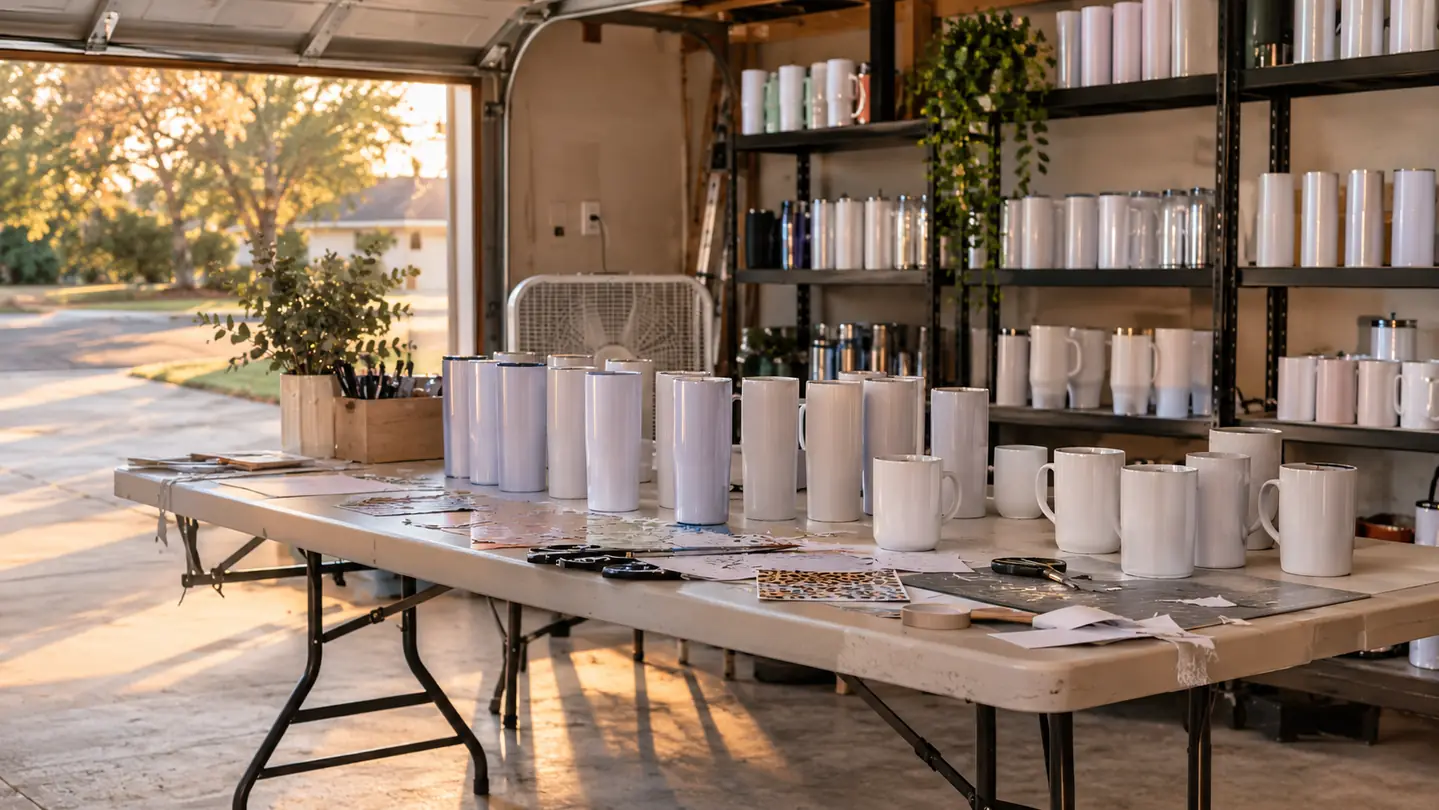
The first tumbler I ever pressed came out with a pale, washed-out band running right through the middle where my wrap had shifted. I had twelve of them promised to a school fundraiser, eleven blanks left on the shelf, and no clear idea what I had done wrong.
That was three years into pressing shirts out of the converted one-car garage behind my house in Independence, Missouri. Shirts I understood. I started with team shirts for my grandson's baseball league, then totes for a church group, then a run of reunion shirts. Drinkware was supposed to be an easy add-on. Instead I spent a whole winter fighting uneven pressure, seam lines and hot spots, and quietly eating the cost of the blanks I ruined.
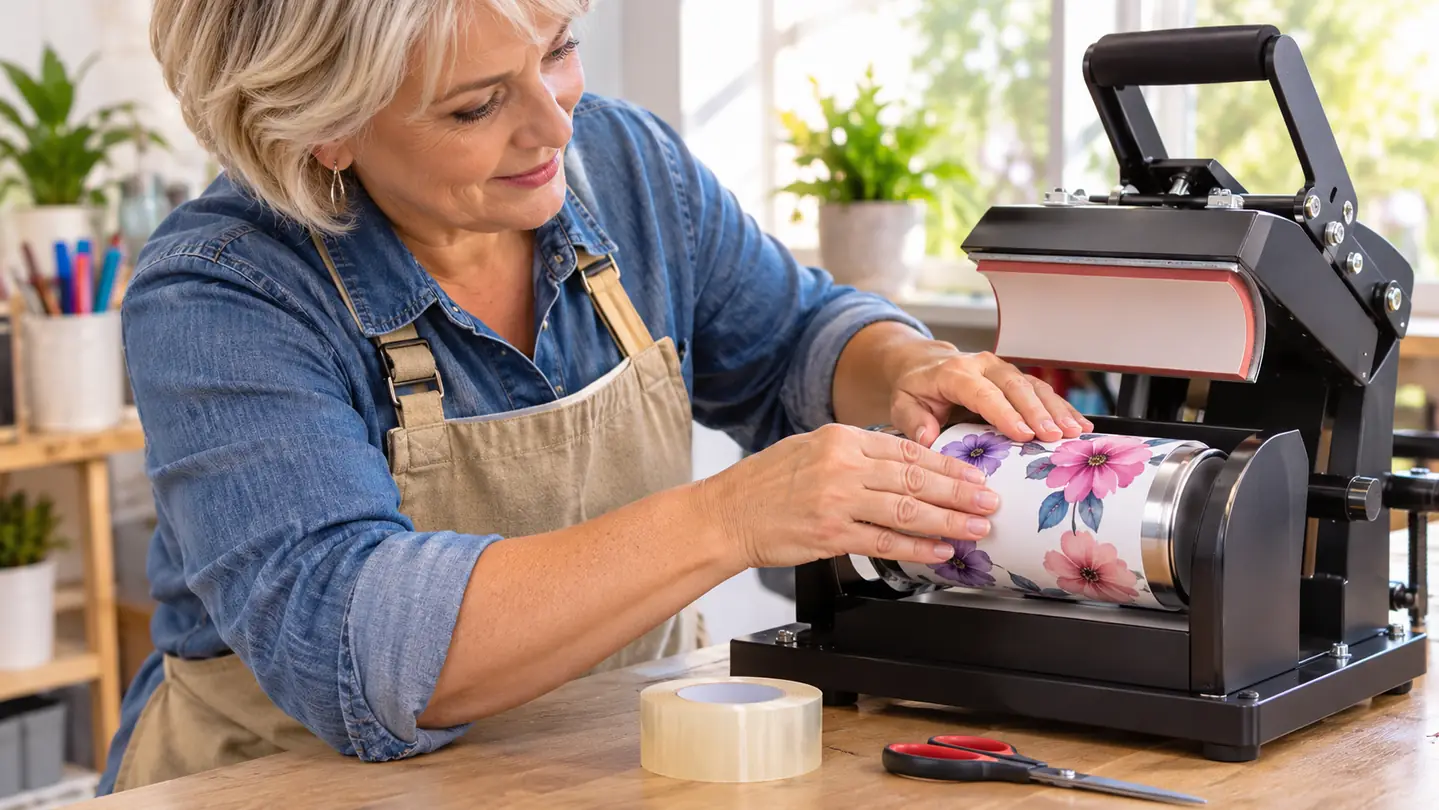
What actually fixed it for me was the HTVRONT Auto Tumbler Heat Press. Not because it does anything clever. Because it takes my hands out of the one part of the job I was never good at, which is holding a wrap against a curved surface evenly for the whole press.
Here is the plain version of how it works. You set your temperature, you load the tumbler with your sublimation wrap taped in place, and the press closes and holds pressure on its own. You are not standing there squeezing a handle and hoping you squeezed it the same way you did on the last one. The HTVRONT does the holding. You do the trimming and the taping, which is the part that actually decides whether the finished cup looks good.
The other thing I did not expect to care about is the R button. Getting a wrap off a hot tumbler cleanly is where a lot of good presses go bad. Press R and the machine halts heating and releases the heat pad right away, so you are not prying at a hot cup while the heat keeps climbing. In my first month with it, that button alone saved me a dozen blanks I would otherwise have scorched.
The temperature range is wider than I expected for a machine this size. It runs from 210 up to 390 degrees Fahrenheit, which covers the low end I use for some sublimation papers and the high end for the tougher coatings on the 30 ounce tumblers that make up most of my orders. It holds tumblers from 2.9 to 3.2 inches in diameter, roughly 10 to 30 ounces, so the small cups and the big ones both fit without a second machine.
It draws 600 watts on standard 120 volt household current, so it runs off the same outlet as everything else on my folding table. It weighs 9.5 pounds and measures about 12.9 by 10.9 by 6.3 inches, so it lives on the shelf under the table when I am not using it instead of taking up permanent space. The warranty is one year, which for a machine in this class is the normal expectation rather than a bonus.
Press R and the heat pad halts and releases right away, so you are not prying at a hot cup while the heat keeps climbing.
The Part I Could Never Get Right Is the Part It Does For Me
Even, steady pressure on a curved cup, from 210 to 390 degrees Fahrenheit, for tumblers between 2.9 and 3.2 inches across and 10 to 30 ounces.
Amazon Check Today's Price on Amazon →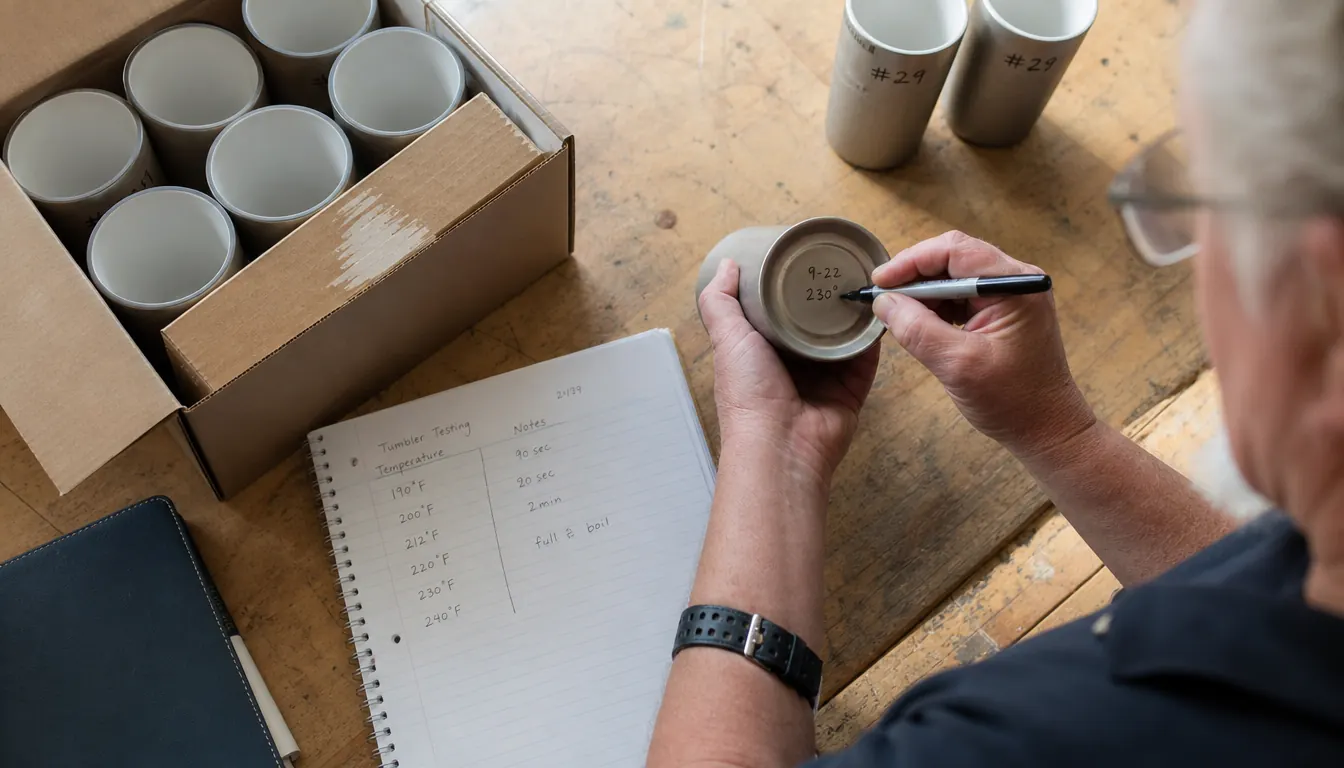
None of that solves the whole problem, and I want to be straight with you about it. A press holds pressure. It does not mix your ink, cut your wrap, or tell you that the blank you grabbed is a coated one that wants a different setting. The first two weeks I had it, I still ruined cups, just different cups. I pressed too hot on a thin coating and got a ghosted image, and I taped a wrap on crooked and no machine on earth was going to fix that.
What the HTVRONT did do was remove the variable I could not control. Before, when a cup came out bad, I had no idea whether it was the pressure, the wrap, the tape or the blank. Now a bad cup is my technique, and technique I can fix. That is the difference between a bad afternoon and a bad month.
The other honest thing is that this machine handles tumblers. That is the job it was built for. It will not press a flat shirt or a tote bag for you. I still keep my flat press for the shirt orders, and the tumbler press sits next to it doing drinkware. If drinkware is the whole plan, this is the right first machine. If you want shirts too, plan on both eventually.
Where it earned its place in my garage was the turnaround. A school order for 40 tumblers used to be a two evening job with a lot of standing and a lot of swearing. Now it is one evening, most of it trimming and taping, and I am not standing over the press the whole time. Gary folds and bags on the busy weekends, and even he noticed, mostly because I stopped asking him to hold things.
What I'd Tell You If We Were Sitting at My Kitchen Table
I would tell you to buy this machine for the machine's job and stop expecting it to be the business. The HTVRONT removes the hardest physical variable in tumbler work, which is steady, even pressure on a curved surface, and it does that reliably. What it will not do is find you customers, and it will not stop you from taping a wrap on crooked. The people I see quit are the ones who bought equipment and expected the equipment to be the plan.
I would also tell you to ruin your first ten blanks on purpose. Buy the cheap ones, press them at different temperatures, write the setting and the result on the bottom with a marker, and keep them in a shoe box. In two years that box will be the most useful thing in your garage. And do not wait until you feel ready. My first order was twelve tumblers for a fundraiser and half of them were not good. The second order was better. That is the whole method.
If Drinkware Is the Whole Plan, Start With the Press That Holds Itself
2.9 to 3.2 inches, 10 to 30 ounces, 210 to 390 degrees Fahrenheit, and a heat pad that lets go the moment you press R.
Amazon Check Today's Price on Amazon →