Nobody tells you that the paper is where a sublimation project quietly goes wrong. You buy the press first, because that is the exciting part, then you watch a dozen videos, then you pick out blanks, and only at the very end do you stand in front of a shelf of paper that all looks the same and costs completely different amounts. That was me four years ago in my garage in Independence, Missouri, holding a pack of A-SUB Sublimation Paper and wondering whether I had just bought the wrong thing.
So let me start with the part most reviews of this paper leave out. A-SUB paper will not rescue a bad press, a cold spot on the plate, or a template with too much ink on it. What it does is behave the same way on sheet one and sheet one hundred. That consistency is the entire reason I keep a pack on the shelf now. It is also the reason I talk people out of it sometimes, and I will get to that.
The Quick Verdict
A consistent coated 8.5x11 sheet that does what a sublimation transfer should do, as long as you stay inside the polyester rule and stop expecting it to print on cotton.
Amazon Check Today's Price →The paper that behaves the same on sheet 1 and sheet 110
110 sheets at 8.5 x 11 inches, coated for sublimation ink only. If your blanks are light colored polyester, ceramic, metal or phone cases, this is the pack I keep on the shelf for orders I cannot afford to redo.
Amazon Check Today's Price on Amazon →How I Actually Tested It
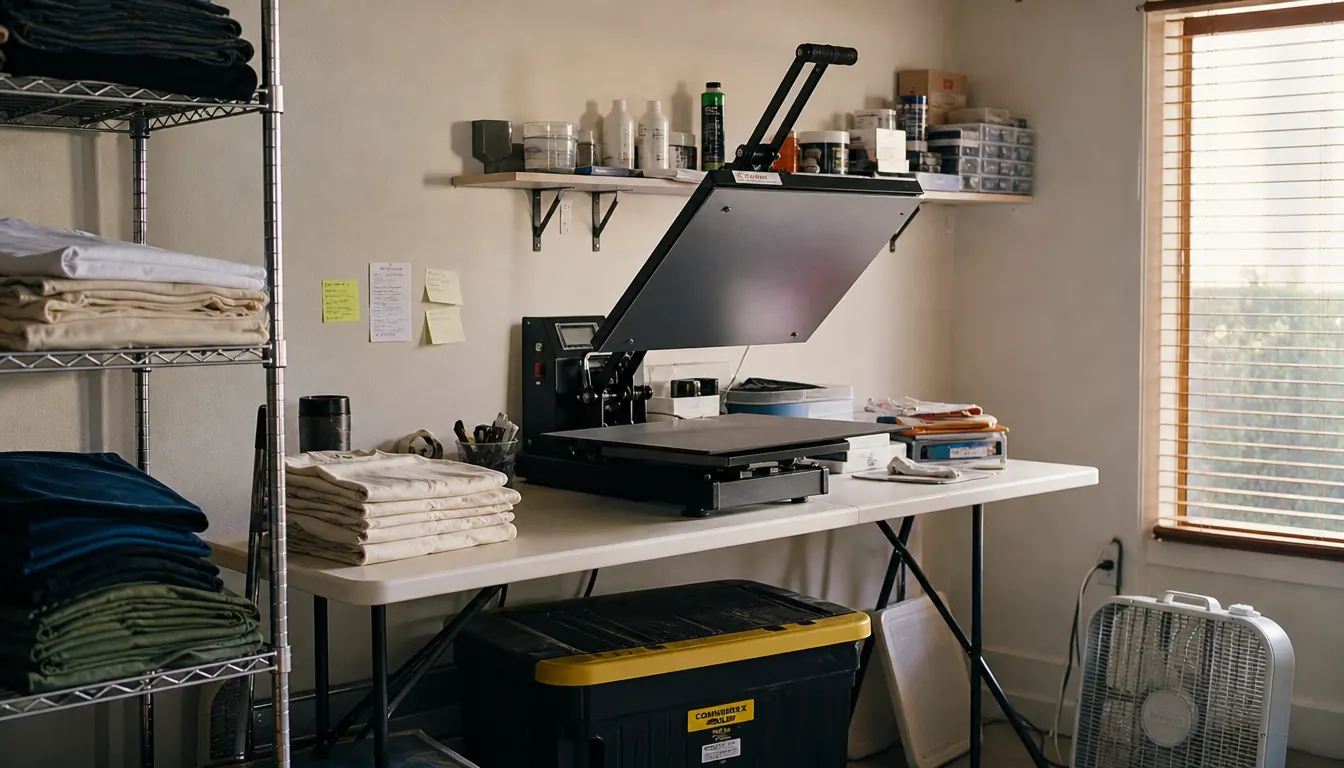
I press in a converted one car garage with a long folding table, a heat press, a shelf of blanks, and a box fan that runs all summer. Most of my work is local. School teams, church groups, family reunions, and a couple of small businesses that order in batches. I started with team shirts for my grandson's baseball league four years ago and I have ruined more blanks than I care to admit since then.
I ran this pack across a few months of real orders rather than a bench test. Light colored polyester shirts in the usual blends, a run of ceramic mugs, some metal blanks, and a set of tote bags. I wrote time and temperature on a notepad for each type, which sounds more organized than it was. Mostly Gary wrote down the numbers I forgot.
What I was watching for was not whether it transferred on the first try. Almost any sublimation paper will transfer on the first try if the heat and pressure are right. What I was watching for was whether sheet eighty behaved like sheet two, and whether a reorder two weeks later behaved like the batch before it. That is the thing that actually costs you money when it goes wrong.
The mug order is the one that taught me the most about all of this. Twenty four ceramic mugs for a church group, and I was pressing them at the same time and temperature I used for shirts because that is what I did in my first year and nobody had told me otherwise. The first three came out looking right on the surface and then rubbed off with a thumbnail two days later when I checked them before boxing. I went back to the notepad, moved the time up in small steps, and pressed a fourth mug. That one held. The number that finally worked was not the number from the video I had watched. It was the number my press and my garage produced, and it cost me four ruined mugs to find it.
One more note on method, because I get annoyed by reviews that pretend to be lab tests. I tested this the way you will use it. A garage that swings twenty degrees between morning and afternoon, a press that needs ten minutes to settle, and a phone buzzing with a customer asking when their order will be ready. If a paper survives that, it will survive your kitchen table.
The Honest Part: the Listing Gives You Two Different Numbers
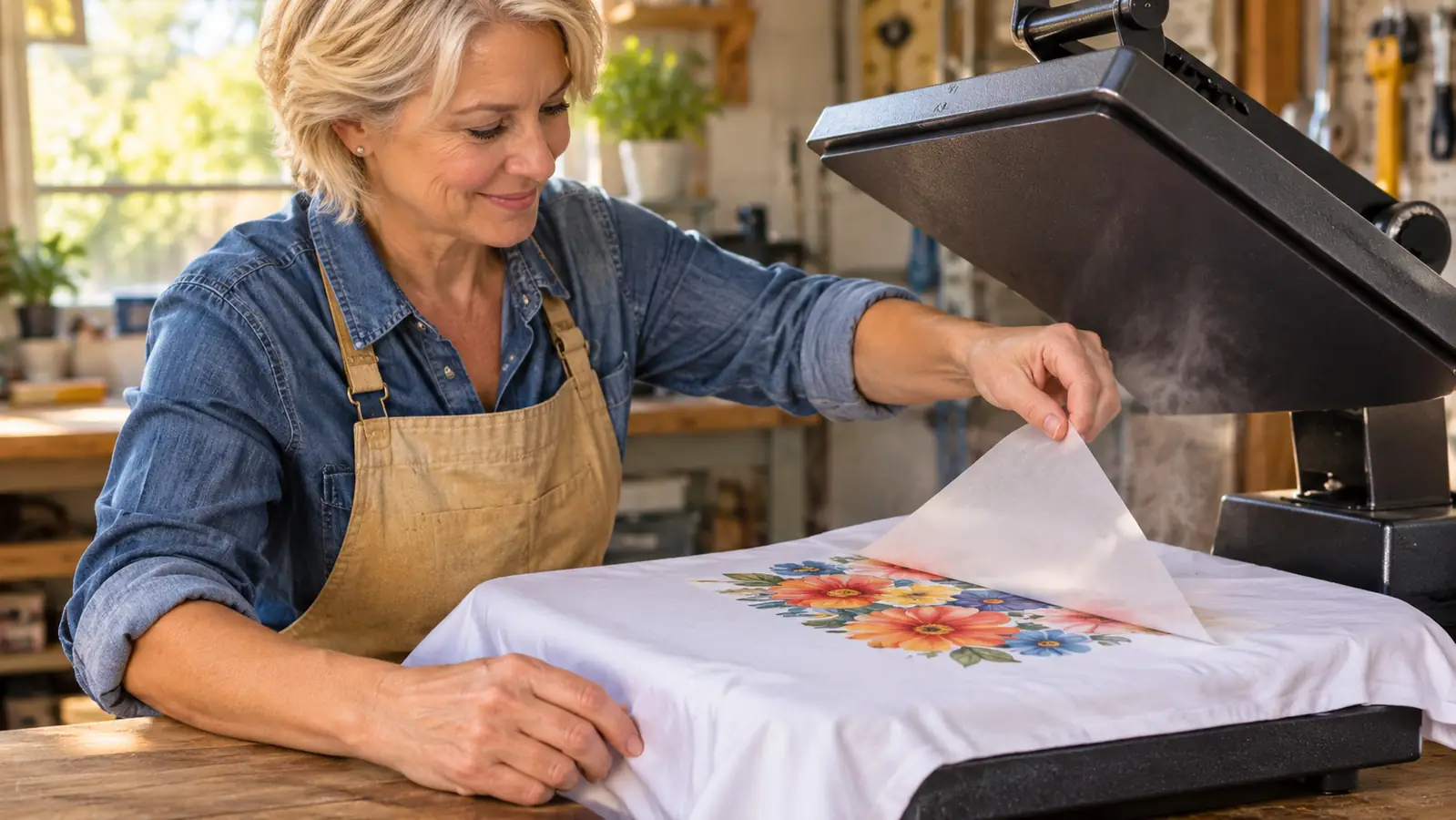
The A-SUB listing says 125g, and the attributes also list a paper weight of 120. A woman in my Facebook group asked me about this and the short answer is that they are two different measurements being used loosely, not a misprint. The item weight is 125 grams. The paper weight figure is 120. Neither number is the thing you should be shopping on.
The thing you should be shopping on is the coating, and the listing is accurate there. It is a coated sheet built for sublimation ink. That coating holds the ink at the surface long enough for the heat to turn it into gas that bonds into polyester. An uncoated sheet lets the ink soak in, and you get a print that looks washed out on the sheet and a shirt that fades after three washes.
The brightness figure listed is 80 lm, which will not mean much to you in practice. What it means to me is a white sheet that does not tint the transfer. On a pale gray or a soft yellow shirt, paper that is not properly bright pulls the color down a notch. I have not had that problem with this one, and I have had it with cheaper packs.
The 30 Percent Cotton Rule Is Where People Get Burned
Here is the honest part nobody says loudly enough. The listing states that this paper works on white or light colored high quality polyester, material with cotton content of 30 percent or less, plus ceramic and tile, phone cases and metal. Read the cotton number again. Thirty percent or less. That is not a suggestion and it is not a range you can nudge on a busy week.
A 50 50 blend shirt gives you a faded, vintage looking result. Some people want that look and sell it on purpose, which is fine, but do not be surprised by it. A cotton heavy shirt gives you something that looks like it went through a dishwasher twice. The dye has nowhere to bond. Sublimation gas needs polyester to grab onto and cotton simply will not take it, no matter what paper you feed the printer.
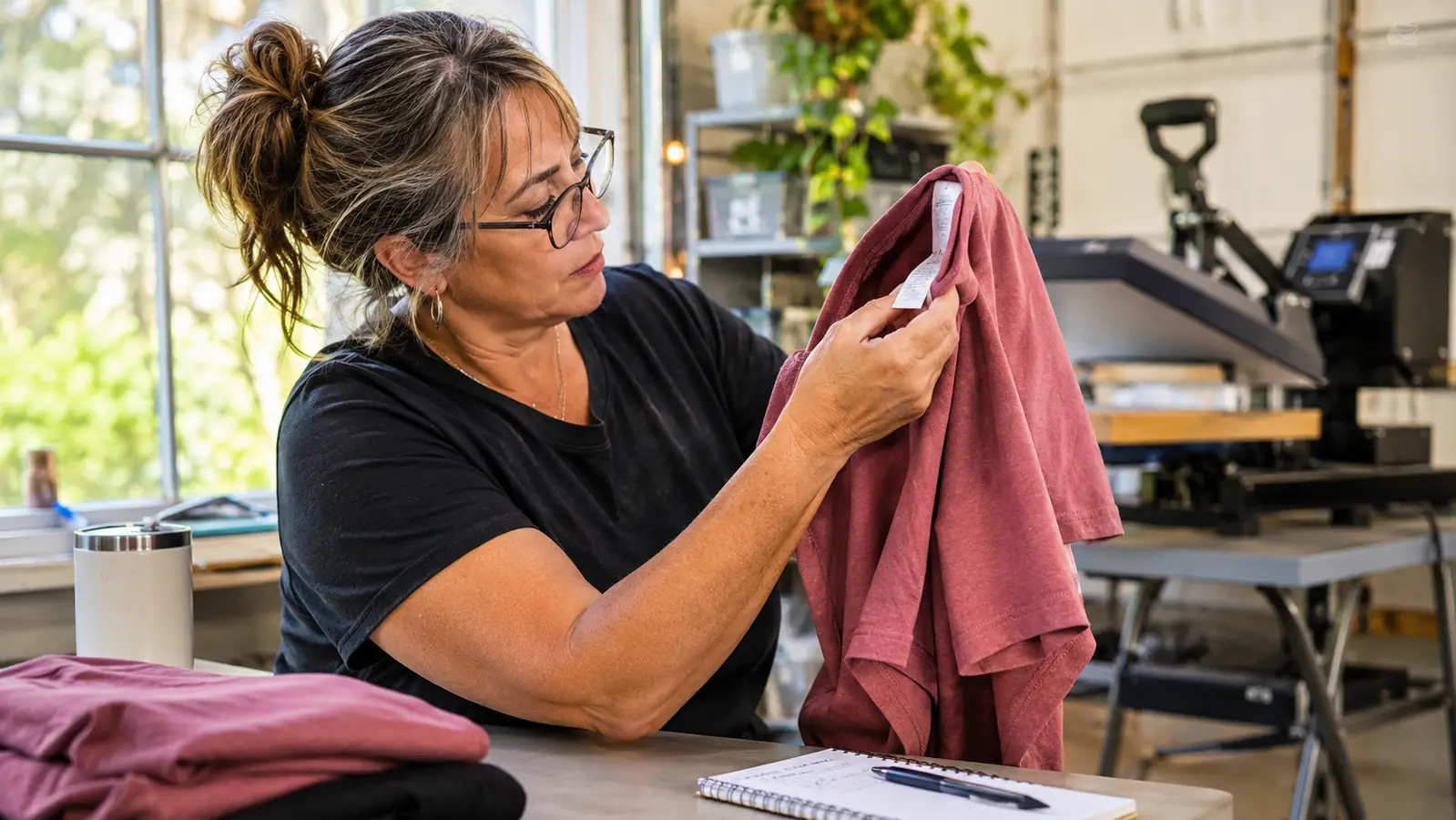
I keep a three by five card taped above the folding table with the fabric rule written on it in marker, because I am the person who will forget it halfway through a busy Saturday. A customer brought a stack of shirts from a big box store, still in the wrapper, and the label read 60 percent cotton. I told her they would fade. She asked me to press one anyway so she could see. The design came out a soft gray where it should have been navy, and she looked at it and understood without me saying another word. She brought polyester shirts the following week. That one sample blank cost me a sheet and saved me a reprint of eleven.
I pressed a batch for a family reunion two summers ago on a blend I did not check closely enough. They came out soft and faded and the customer's aunt loved them, which was pure luck and not skill. I have not made that mistake twice. Now I read the fabric label before I quote anything, and if it is over 30 percent cotton I say so out loud before I take the order.
Almost any sublimation paper transfers on the first try. The real question is whether sheet 80 behaves like sheet 2, and that consistency is the only thing I am actually buying.
Where It Fails, and I Have Made All of These Mistakes
It will not work with regular ink. The listing says this plainly and it is still the number one thing I see beginners get wrong. You need a printer loaded with sublimation ink, full stop. A standard inkjet with standard ink lays down a print that looks perfectly fine on the sheet and then transfers almost nothing. If your transfers come out faint and you have already checked heat, time and pressure, check the ink before you blame the paper.
The first month I ever did this, I had a small inkjet and a bottle of sublimation ink, and I could not tell you today why I thought filling the black cartridge alone would be enough. Every print came out pale and I spent an entire evening convinced the paper had gone damp in the garage. It had not. Once all the cartridges had sublimation ink in them, the same sheets transferred exactly as they should have. If you take one thing away from this article, take that one. The paper cannot put down color the ink does not contain.
It does not do dark shirts. Nothing about this sheet makes dark fabric work, because the transfer is translucent. On a black shirt you get a ghost of the design and nothing else. If you want dark garments, that is a different process with a different material, and no paper choice on the market changes that fact.
And it will not fix a cold spot. My first press ran cooler on the left third of the plate, and I blamed the paper for two weeks before I bought an inexpensive infrared thermometer and found out the truth. If you get a faded patch in the same place every time, move the design to the other side of the plate. If the fade follows the design, it is your paper or your ink. If it stays in the same spot, it is your press.
The last thing it will not do is forgive a wet print. If your printer lays down heavy coverage and you press before the sheet is properly dry, you get bleed at the edges and a blurry outline on fine text. That is not a flaw in the A-SUB sheet. That is a template that is too ink heavy, and the fix costs nothing.
110 Sheets Lasts Longer Than You Expect, and Shorter Than You Want
The pack is 110 sheets at 8.5 by 11 inches, which is the size most home sublimation printers take without trimming or fuss. That count sounds generous until you start printing test sheets. My honest rule after four years is to budget one sheet of waste for every four shirts on a new design, because you will misjudge placement or color on the first pull.
Which means a pack is roughly 80 to 90 real projects if you are careful, and closer to 70 if you are me on a busy weekend. That is plenty for a side business doing local orders. It is not plenty if you run a shop that prints every day. If that is you, buy in bulk and stop reading reviews, because you already know more than this article can tell you.
I count sheets now, which I did not do in my first year. The pack sits on the shelf with a sticky note folded over the end flap and I make a tick mark for every sheet I pull, waste included. That sounds fussy for a garage operation. It also means I know three days before I run out instead of discovering it on the evening a reunion order is due. When the count gets low I reorder whether or not I have a job on the table, because the alternative is driving across town to a store that may not carry the size at all.
What I Liked
- Consistent transfer from the first sheet of the pack to the last
- Coated surface holds detail on small logos and fine text
- 8.5 x 11 fits standard home sublimation printers without trimming
- Works across polyester, ceramic, metal and phone cases with the right settings
- 110 sheets covers a real batch of local orders before you reorder
Where It Falls Short
- Cotton content above 30 percent gives faded results, no exceptions
- Useless with regular inkjet ink, and the listing will not remind you twice
- Not a solution for dark garments of any kind
- Test sheets eat into the count faster than beginners expect
- Nothing on the packaging enforces the fabric rule for you
What It Is Honestly Worth Against a Generic Pack
I have used cheaper packs. Some were fine. The difference shows up in the middle of the pack, not the beginning. Less expensive paper tends to curl at the edges as the humidity changes, and a curled sheet feeds crooked, and a crooked feed means a design a quarter inch off center on a tote bag you cannot sell.
The other difference is coating weight. Lighter coated sheets show weaker blacks on a metal blank or a mug. On a white polyester shirt you may never notice it. On a phone case, where the design sits on a hard surface and every bit of density shows, you will. If your work is mostly shirts, this is a smaller deal than the forums make it out to be. If you sell hard blanks, it matters more than the shirt people will tell you.
So the honest position is that this is a good middle of the road pack. Not a premium sheet and not the bargain bin. It earns its place because I do not have to think about it. I open the box, I print, I press, and I do not spend the evening guessing whether the next sheet will behave.
One thing I did change this year is storage, and it made more difference than any paper swap. The garage swings with the weather, and a sheet left out on the table overnight takes on that moisture whether you notice or not. The open pack now lives inside a plastic bin with the lid snapped on, up on the shelf beside the blanks, and the sheets feed flat every single time. That is not an A-SUB problem or a coating problem. It is a Missouri summer problem, and a bin costs less than a reprint.
Who This Is For
You just bought a press and a printer and you are taking orders from people you actually know. You are mostly on light colored polyester shirts, plus some mugs and maybe a set of metal blanks or a phone case. You want one pack that will not add a new variable while you are still learning heat, time and pressure. That is exactly who A-SUB paper is built for, and it is why I keep it on the shelf for orders I cannot afford to redo.
Who Should Skip It
Skip it if your customers keep asking for cotton, because no paper choice makes that work and you will burn through sheets proving it. Skip it if you are printing dark garments, if your printer is still loaded with regular ink, or if your press has a cold spot you have not diagnosed yet. Fix those three things first. Paper is the cheapest variable to blame and the last one to actually be the problem.
If your blanks are polyester, start with the pack I stopped second guessing
110 sheets at 8.5 x 11 inches, coated for sublimation ink, consistent from the first sheet to the last. Read the fabric label first, then order with confidence.
Amazon Check Today's Price on Amazon →