
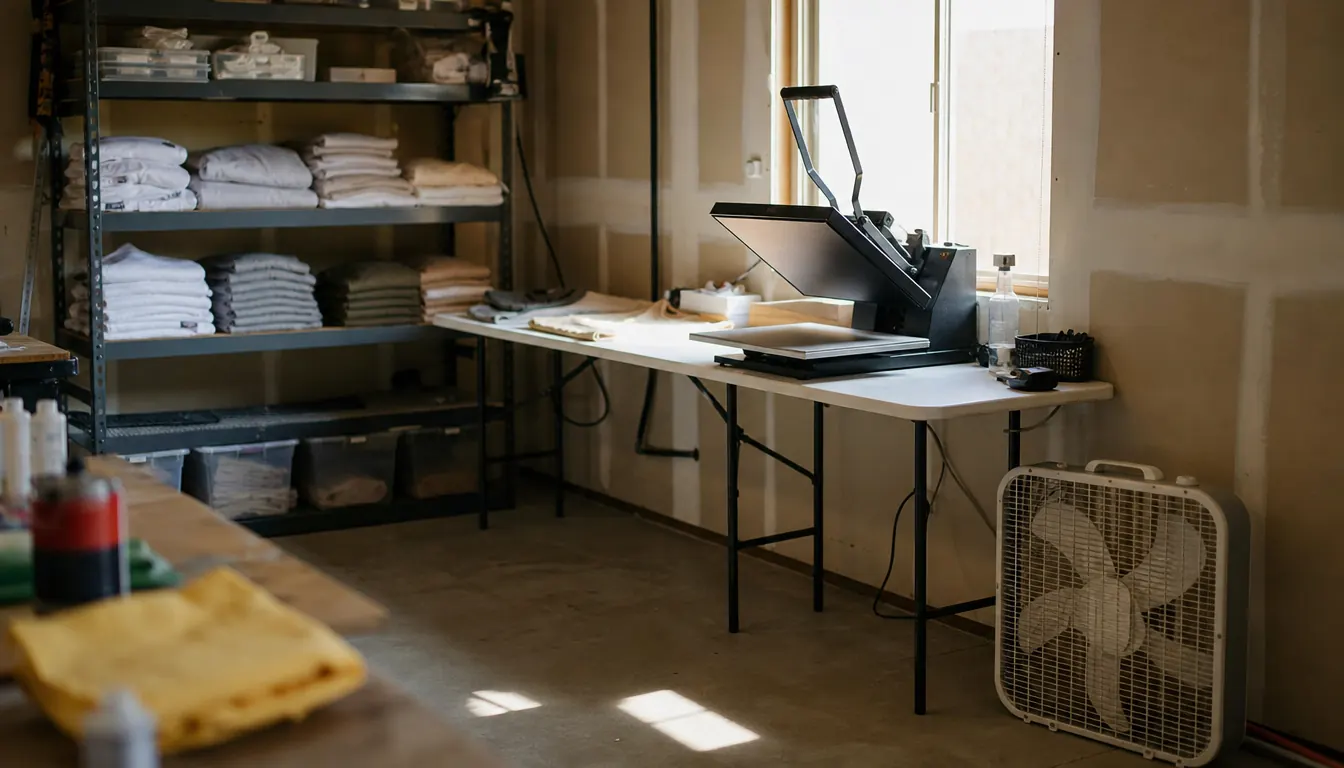
The corner of my garage that we call the spare room sat empty for six years. It held a lawnmower and a stack of plastic bins. Now it holds a Fancierstudio 15x15 heat press, a shelf of blank shirts, and a box fan I run from June to September. It is the busiest eight square feet in the house.
My name is Tammy Brandt. I am 52, I live in Independence, Missouri, and about four years ago I pressed my first shirt for my grandson's baseball team. It came out crooked, scorched along the collar, and I nearly put the whole machine back in the box. Gary, my husband, told me to slow down and read the instructions. He was right, and he still brings it up.
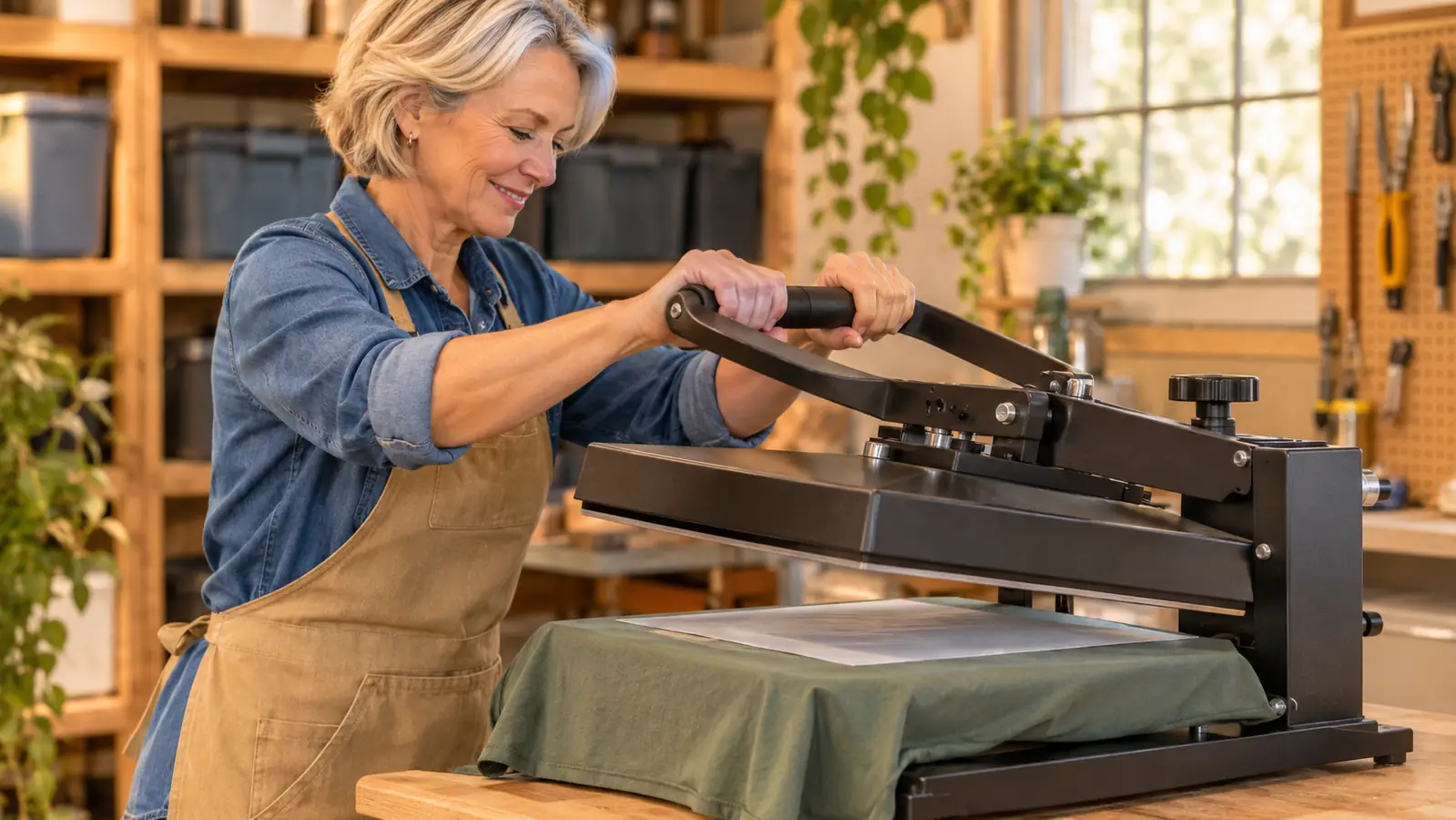
Here is what I did not understand then. A press does not care how creative you are. It cares whether you set two numbers correctly. The Fancierstudio panel gives you exactly two things to set: temperature and time. Temperature runs from 0 to 699 degrees Fahrenheit. The timer runs from 0 to 999 seconds. Everything after that is knowing what to put under the platen and how hard to lean on the handle.
The machine is more compact than the photos suggest and heavier than you expect. It measures 33 inches long, 23 wide and 20 high, which means it needs a real table, not a card table you fold up after every order. It pulls 1800 watts on 110 volts, so put it on an outlet that is not already sharing with a space heater or a window unit. I learned that in July, in a garage, with the fan running.
The first month was mostly education. Ten blank shirts, no designs on them, just to feel the handle and watch the timer count down. That sounds wasteful until you compare it to ruining a transfer you already spent an evening weeding. By the end of that month I could load a shirt, close the platen and know by the resistance whether it was sitting flat.
Three shirts in, I stopped guessing. Forty seconds at 385 degrees, press sheet on top, and the vinyl on that team set has not lifted in four years.
Covers a full adult front print in one press, no shifting the shirt halfway through
A 15 by 15 inch platen handles a standard front, a tote laid flat, or two mouse pads lined up. Electronic time and heat control, Teflon coated platen, 1800 watts on standard 110 volt power, temperature from 0 to 699 degrees Fahrenheit and a timer from 0 to 999 seconds. Rated 4.6 out of 5 across more than 9,000 buyers.
Amazon Check Today's Price on Amazon →What changed for me was volume. Not big volume. Local volume. School teams, church groups, family reunions, and two small businesses that order a few dozen shirts a season. I press in the garage, I sell through word of mouth and one local Facebook group, and Gary folds and bags on the weekends when an order runs long.
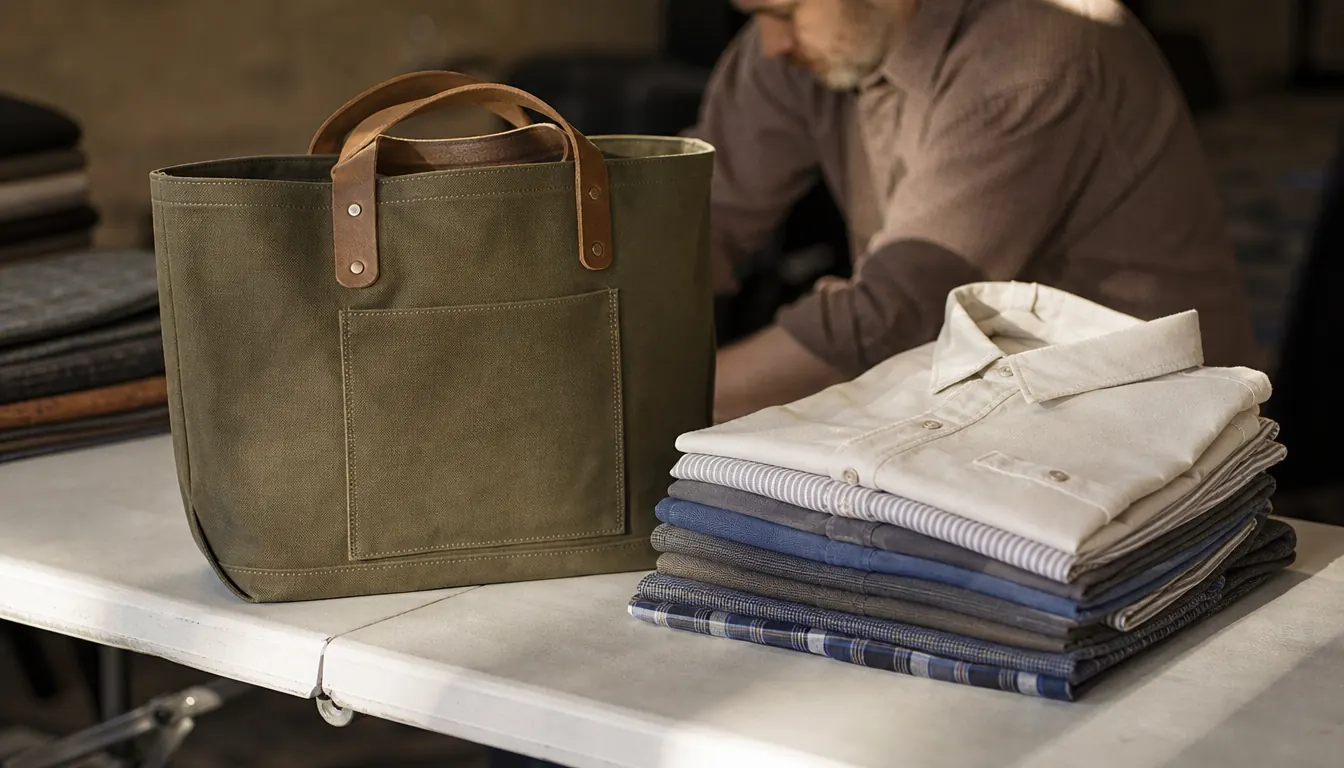
Sublimation is where the 15 by 15 area earns its keep. A full front print on an adult tee needs the whole platen. So does a tote bag laid flat. Mouse pads fit two at a time if you line them up. The recommended uses on the listing are bag, mouse pad and t-shirt, and that matches exactly what comes off my table.
The parts I do not love are honest. The warranty is three months, which is short, so register the machine and keep the receipt somewhere you will actually find it. The platen has a Teflon coating, and a coating is not a permission slip to press straight onto vinyl, so keep a press sheet between the platen and the transfer anyway. And the pressure takes some feel. Too much and the shirt shifts under you. Too little and the transfer peels in the wash three weeks later, after the customer has already taken it home, which is the worst kind of failure because you cannot fix it by then.
The good news is that the learning curve is measured in shirts, not weeks. My first five were bad. Number six was sellable. By number twenty I had a routine: lay the shirt, smooth it, press four seconds to flatten it, then apply the transfer with the sheet on top and both hands on the handle.
What I'd Tell You If We Were Sitting at My Kitchen Table
The first thing I would say is that this is a tool, not a business. The Fancierstudio does its job if you keep it dry and stop slamming the handle. What it will not do is find customers. My first ten orders came because I wore a shirt I made to my grandson's game and three mothers asked where I got it. That was the entire marketing plan, and it cost me one shirt.
The second thing is to buy for the work you want, not the work you have. I would have outgrown a smaller platen inside two months. A 15 by 15 area means you are not rotating a shirt mid-press and hoping the seam lands in the same place, and that single difference is what separates a clean front print from one you quietly throw away.
The third thing is to treat your first month as practice you are paying for. Buy cheap blanks, press them with nothing on them, learn what 385 degrees feels like on cotton versus a poly blend. Nobody starts good at this. The machine is not the hard part. Knowing when to lift the handle is the hard part, and you only learn it by pressing things you are willing to ruin.
Start on a machine that will not be the reason it goes wrong
Fancierstudio 15x15 digital heat press. 15 by 15 inch platen, electronic time and heat control, 0 to 699 degrees Fahrenheit, 0 to 999 second timer, 1800 watts on 110 volts, Teflon coated platen, 33 by 23 by 20 inches, three month warranty. 4.6 out of 5 from more than 9,000 ratings.
Amazon Check Today's Price on Amazon →