Short answer: if you want to press full shirt fronts, totes, and mouse pads in batches, the Fancierstudio 15 x 15 digital heat press is the machine that does the job. If you make one onesie at a time at the kitchen table and put everything away in a drawer afterward, the Cricut EasyPress is the easier machine to live with. Both are heat presses. They are built for different kinds of work.
I have been pressing for about four years, starting with team shirts for my grandson's baseball league and growing into a small word-of-mouth business out of the converted one-car garage in Independence, Missouri. My work is mostly local: school teams, church groups, family reunions, and a couple of small businesses. I learned the slow way, with scorched blanks and transfers that slid halfway through a press. What I know now is that the press does not make the business. It makes the business possible. The Fancierstudio is the press I would put on a table for someone who plans to sell shirts, totes, or mouse pads. The Cricut EasyPress is the press I would hand to someone who wants to make birthday shirts for the family and nothing more. If you are on the fence, the rest of this comparison is the conversation I wish I had before I spent money on the wrong size press.
| Fancierstudio 15 x 15 | Cricut EasyPress | |
|---|---|---|
| Pressing area | 15 x 15 inches, a full adult front or back in one placement | Smaller plate, so a full back takes two or more placements |
| Temperature control | Electronic heat control, listed range 0 to 699 F | Simpler settings aimed at common craft materials |
| Timer | 0 to 999 seconds, set in exact seconds | Built-in timer for short craft presses |
| Power draw | 1800 watts at 110 volts | Draws less power, easier on a shared household circuit |
| Footprint | 33 x 23 x 20 inches, needs a dedicated table | Stores on a shelf or in a closet between projects |
| Small and odd areas | Best on flat panels and full fronts | Easier to place on sleeves, onesies, and small items |
| Batch work | Built for repeating the same setting across a stack of blanks | Better for one-off projects than a production run |
| Build and surface | Rubber construction with a Teflon coating on the heat platen | Portable press unit with a compact plate |
| Warranty | 3 months | Check Cricut's current warranty terms |
| Best for | Team shirts, totes, mouse pads, sublimation on flat panels | Occasional craft projects and small apparel |
Where the Fancierstudio 15 x 15 Wins
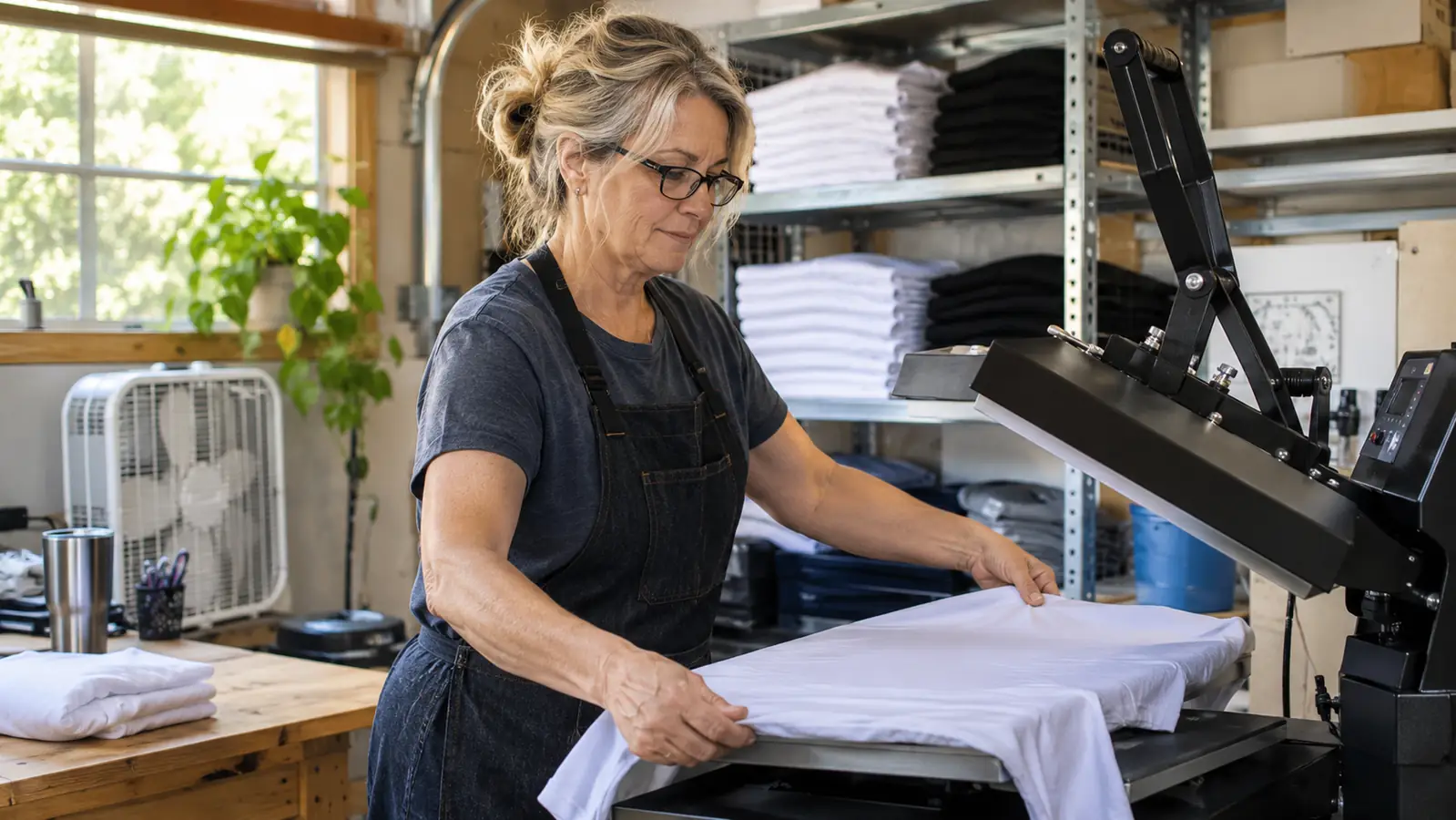
The first advantage is the 15 x 15 inch pressing area. A full adult front or back fits under the heat platen in one placement. That matters more than new pressers expect. With a smaller press you press the same shirt in sections, and every extra placement is another chance to shift the transfer, scorch a corner, or leave a hard line where the two passes meet. On a team order, that is the difference between a clean stack of shirts and a pile you have to redo. I load the shirt, lower the heat platen, and the whole panel is done. The 15 x 15 heat press sheet included with the unit gives you a barrier for the first few jobs without another trip to the store. It also gives you a clean surface to practice on before you touch a shirt you plan to sell.
Control is the second advantage. The Fancierstudio has electronic time and heat control, with a listed temperature range of 0 to 699 F and a timer range of 0 to 999 seconds. I keep a notebook with the settings for each blank: 320 F for 30 seconds on a polyester tee, 385 F for 45 seconds on a canvas tote, and a longer press for a thick mouse pad. Setting the time in exact seconds, not counting in my head while I hold a transfer, is what makes an order repeatable. The Teflon coating on the heat platen helps with stray adhesive and wipes down easier after a rhinestone job. The machine measures 33 inches long, 23 inches wide, and 20 inches high, so it needs a real table with room behind it. It draws 1800 watts at 110 volts, so do not run it on the same circuit as a space heater or a window air conditioner. The warranty is 3 months. I will not pretend that is generous. Treat the first month as your learning window and read the manual before you press anything you care about.
The third advantage shows up when you stop thinking about one shirt and start thinking about a stack. A full-size press lets you keep the same setting and the same placement for every piece. My table is set up so the press stays put, the blanks are on the left, and the finished stack is on the right. That sounds small until you have twenty shirts to finish before a Friday game. The Fancierstudio is not a lightweight machine, and it is not one you pull out for a single onesie. It is the tool that stays set up and waits for the next order. If that sounds like your garage or spare room, the size stops being a drawback and becomes the reason to buy it. The rubber construction also keeps it steady on the table, which matters when you are pressing a thick tote and the whole setup wants to shift.
A full adult front fits under a 15 x 15 platen in one placement. Every extra placement is another chance to be off.
Where the Cricut EasyPress Wins
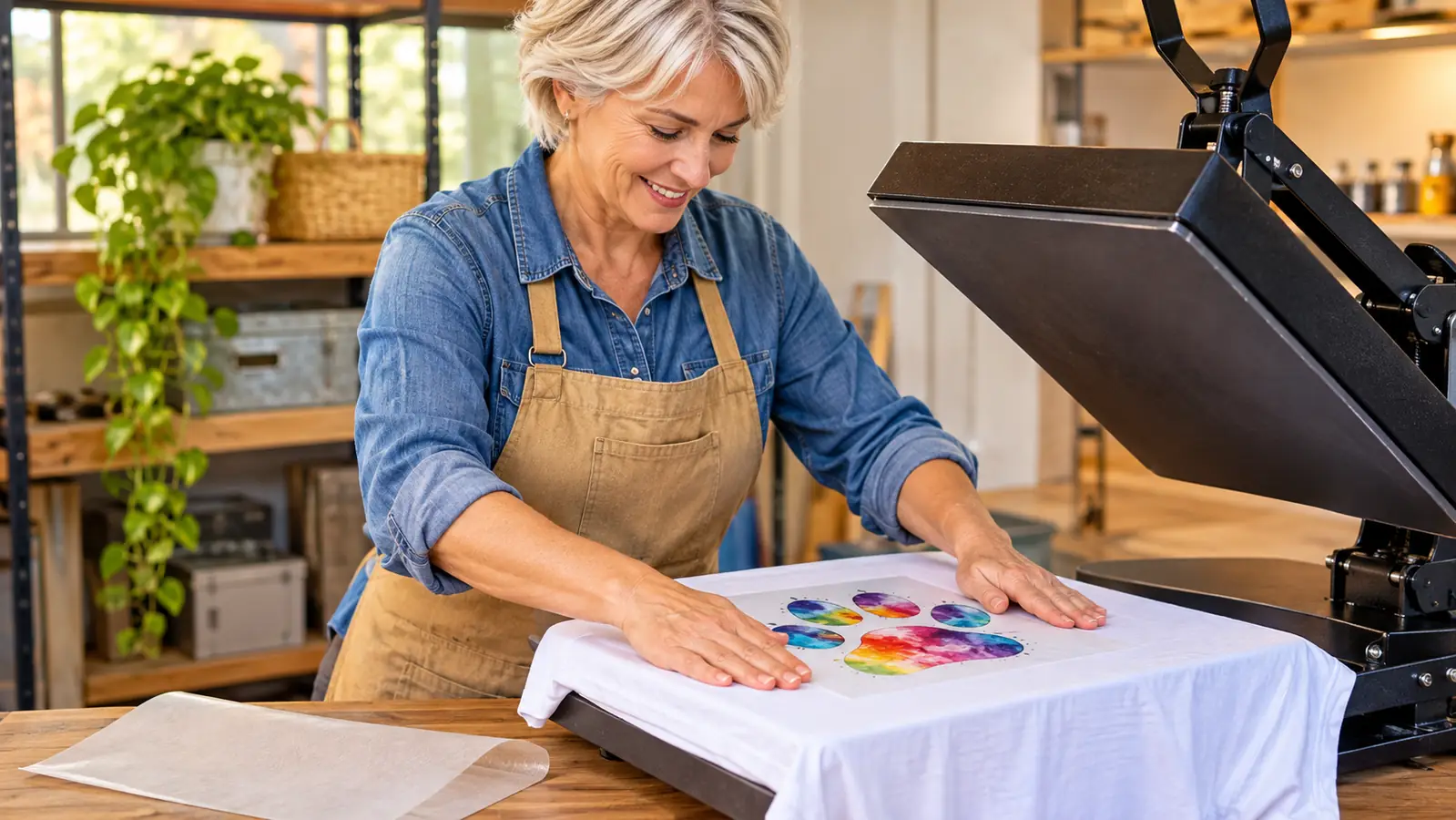
The Cricut EasyPress wins on space, storage, and small-project convenience. It is a portable press you can set on a mat, use on the kitchen counter, and put away when you are done. If you live in an apartment, share a dining table with the rest of the family, or only press a few items a month, that matters. It also draws less power than an 1800 watt press, so it is less likely to trip a circuit in an older house. For onesies, small totes, sleeve prints, and odd spots where a full-size platen would be awkward, the smaller surface is easier to place. It is the press I would recommend to a friend who wants to make a shirt for a birthday party and does not want a table devoted to it.
The tradeoff is throughput. The EasyPress is not built to press a stack of twenty team shirts on a Saturday morning. You will make more placements per shirt, and each placement is a chance to be a little off. The controls are simpler, which is good for a beginner, but simpler also means less room to dial in a temperature for an unusual blank or a sublimation panel. If your work is mostly heat transfer vinyl on cotton tees and you press when the mood strikes, the EasyPress is the friendlier tool. If you have a craft business, even a small one, the Fancierstudio will pay you back in time and consistency. That is not a slogan. It is the difference between pressing one shirt in four minutes and pressing one shirt in twelve, and it is the reason I keep a full-size press set up in the garage.
There is also a safety and comfort side to this. A portable press is easy to move out of the way, which means it is less likely to be left on a table where a child or a guest can bump it. You still have to respect the heat. The plate gets hot, and the cord needs space. A full-size press stays in one place and makes a clear hot zone in the room. That is safer for a busy household if the press has its own table. The EasyPress is easier to put away, but putting it away also means you have to set it up again next time. For occasional crafters, that trade is fine. For weekly orders, the setup and teardown gets old fast, and a press that is already out is a press you will actually use.
If you are pressing for customers, start with the 15 x 15 Fancierstudio
The larger platen covers a full adult front in one pass, and the electronic time and heat controls let you repeat the same setting order after order. Check the current listing for availability and the 3 month warranty terms.
Amazon See the Fancierstudio 15 x 15 on Amazon →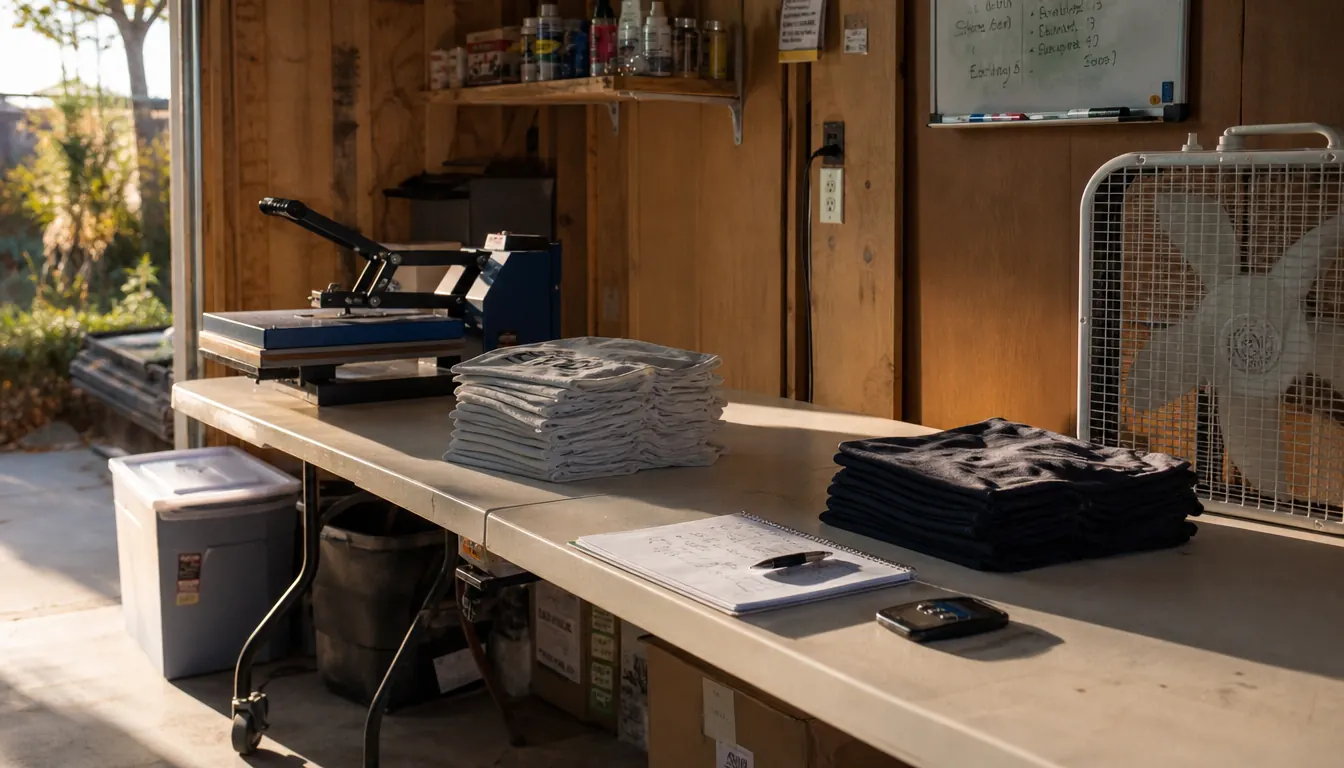
Who Should Buy Which
Buy the Fancierstudio if you have a dedicated table, a circuit that can handle 1800 watts, and a reason to press more than a few items a month. It fits team shirts, full fronts, totes, and mouse pads. It also fits sublimation and rhinestone work on flat panels, as long as you respect the 3 month warranty and keep your settings written down. Buy the Cricut EasyPress if your space is shared, your projects are small, and you want to put the press away when you are done. It is the better pick for onesies, sleeves, and the occasional shirt for a family event.
Here is the test I would use. Count the number of items you plan to press in a month and look at the largest one. If the largest item is a full adult shirt back and the count is more than ten, the 15 x 15 Fancierstudio is the more practical first press. If the largest item is a onesie or a small tote and the count is under ten, the EasyPress will do what you need without taking over a table. Neither machine is a bad purchase. The mistake is buying a small press for batch work, or a full-size press for a craft you do twice a year. Write the numbers down before you shop. It is easier to be honest on paper than in a checkout cart.
One more thing. The Fancierstudio is not a magic box. It still needs a clean platen, a flat surface, and a test blank before every new material. The 15 x 15 heat press sheet is there to protect the shirt, not to replace a test. I keep a stack of cheap blanks for testing and I write the date and setting on each one. That habit has saved me more money than any single tool in the garage. If you buy the press and skip the testing, you will blame the machine for a problem that came from the settings. If you test, the machine will do exactly what you tell it to do. That is true of the EasyPress too, but the full-size press gives you more room to make a mistake before the mistake becomes an entire order.
Think about where the press will live before you choose. A 33 x 23 inch machine needs a table that does not need to be cleared for dinner. The 20 inch height matters too, because you will be leaning over it. A kitchen counter is too high for some people, and a low coffee table is worse. Measure the table, measure the space behind it for the cord, and check the circuit. The EasyPress needs less room, but it still needs a heat-safe surface and a place to cool before you store it. The press that fits your room is more likely to get used than the press with the better review.
My own pick is the Fancierstudio because my work is repeat work. I press the same team shirt in the same spot until the stack is done, and the 15 x 15 platen lets me do that without thinking about placement twice. If you are not running a small business, that logic may not apply to you. The EasyPress is a good tool for the person who wants to make a few gifts, learn how heat transfer vinyl behaves, and keep the dining table clear. The Fancierstudio is the better tool for the person who wants a press that is ready when the next order comes in. Neither choice is permanent. Plenty of people start with a small press and add a full-size one later, or start with the full-size press and buy a portable unit for craft fairs. The important thing is matching the press to the work you actually have, not the work you hope to have.
The right press is the one that fits your table and your order size
For full fronts, totes, mouse pads, and batch work, the Fancierstudio 15 x 15 is the more practical first press. Confirm the current listing details and the 3 month warranty before you buy.
Amazon View the Fancierstudio 15 x 15 on Amazon →